aslanleather.com
aslanleather.com
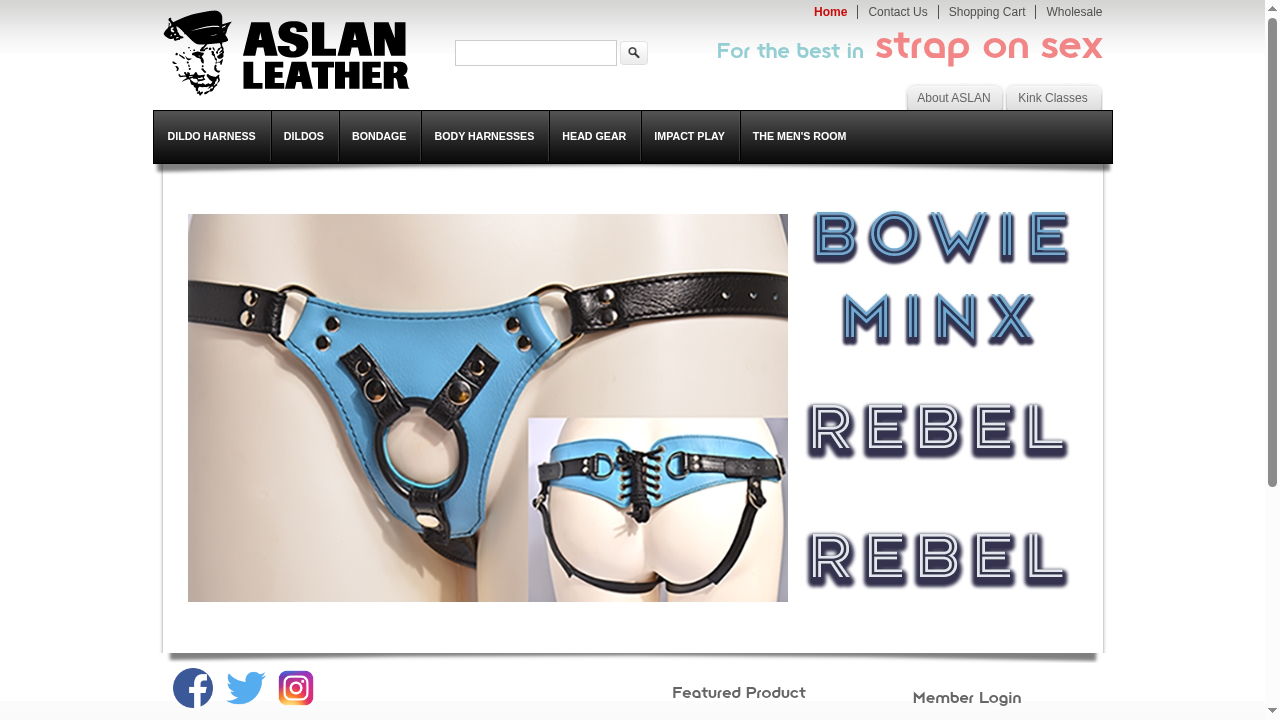
ASLAN Leather operates as a specialized e-commerce retailer and manufacturer within the BDSM leather subculture. Founded in 1991, the site focuses on high-quality dildo harnesses, bondage gear, and offers educational classes led by owner Carey Gray....
Visit aslanleather.comASLAN Leather operates as a specialized e-commerce retailer and manufacturer within the BDSM leather subculture. Founded in 1991, the site focuses on high-quality dildo harnesses, bondage gear, and offers educational classes led by owner Carey Gray. It positions itself as a premium destination for serious practitioners rather than a generalist marketplace.
This is an authentic legacy property deeply embedded in the leather and BDSM ecosystem, functioning primarily as a direct-to-consumer store with significant wholesale infrastructure. Unlike generic affiliate shells, ASLAN Leather emphasizes craftsmanship, material quality (leather vs. vegan), and specific product lines like the Minx harness series. The inclusion of 'Kink Classes' adds an experiential layer that bridges retail with community education. While the site design appears dated compared to modern Shopify builds, the historical depth, lifetime guarantees, and B2B wholesale portal indicate a commercially meaningful operation with established brand equity.
- Content style is product-centric with heavy emphasis on material specifications and durability.
- Positioning targets the high-end niche market rather than mass-market kink consumers.
- Business model combines D2C retail sales with B2B wholesale distribution channels.
- Niche ecosystem role is that of a specialized manufacturer-retailer hybrid.
- Quality/authenticity observation suggests genuine inventory and brand history over SEO filler.
- Meta descriptions are largely missing across the crawled page inventory.
- Site structure relies on flat catalog hierarchies rather than deep content hubs.
- Search visibility likely depends on long-tail product keywords rather than broad category terms.
- Product pages contain minimal text depth, prioritizing SKU variations over editorial content.