bdsm-gear.com
bdsm-gear.com
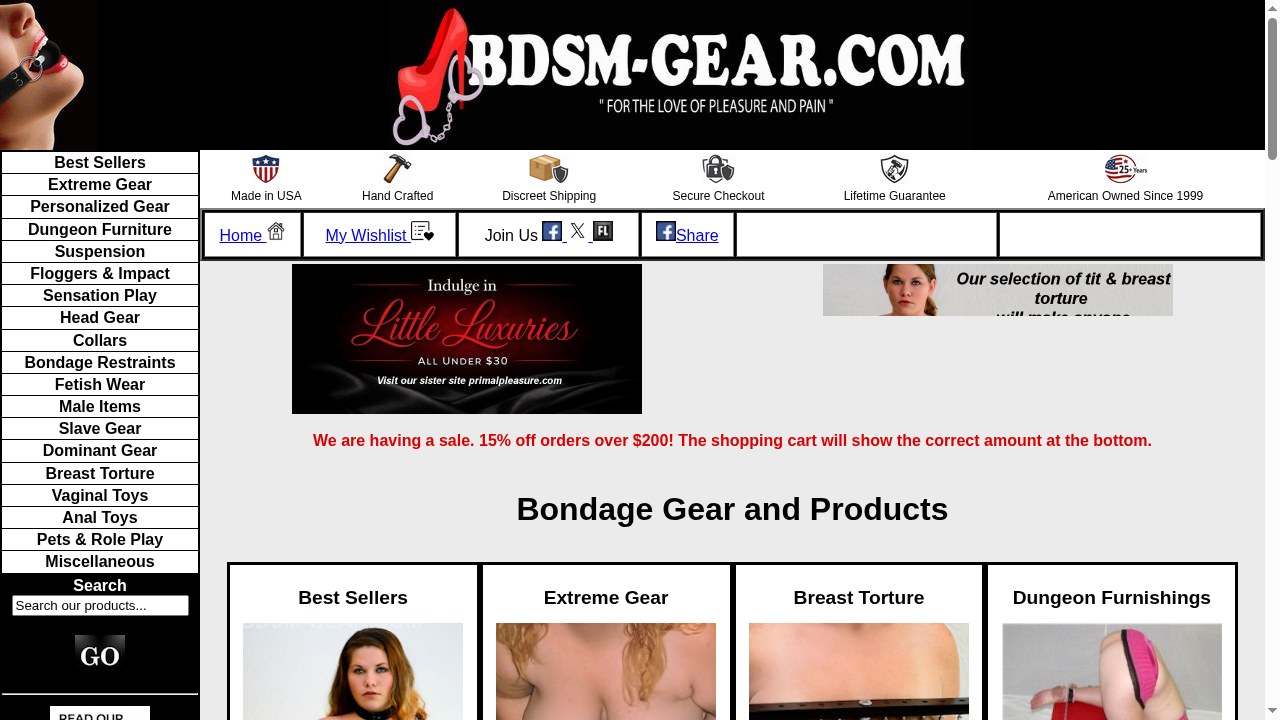
BDSM-Gear.com is an established e-commerce retailer specializing in handcrafted dungeon furniture and bondage equipment made in the USA. Operating since 1999, the site positions itself as a direct manufacturer rather than a middleman, targeting serio...
Visit bdsm-gear.comBDSM-Gear.com is an established e-commerce retailer specializing in handcrafted dungeon furniture and bondage equipment made in the USA. Operating since 1999, the site positions itself as a direct manufacturer rather than a middleman, targeting serious practitioners who prioritize durability over mass production. It functions primarily as a niche supplier within the broader BDSM ecosystem.
This property operates as a dedicated ecommerce store focused on high-end physical goods for the kink community. Unlike content-heavy hubs or dating platforms, BDSM-Gear.com leverages its longevity (since 1999) and 'Made in USA' manufacturing narrative to build trust among buyers seeking heavy-duty furniture like spanking benches and crosses. The site clearly distinguishes itself from affiliate shells by emphasizing direct sales and custom sizing options, though it relies heavily on a sister site (Primal Pleasure) for broader inventory depth. It appears commercially meaningful with a clear revenue model centered on physical product sales rather than subscriptions or ad traffic.
- Content style emphasizes manufacturer directness and durability over lifestyle storytelling
- Positioning relies on 'Made in USA' heritage and family-owned workshop narrative
- Business model is DTC retail with clear product categorization and pricing structure
- Niche ecosystem role is supplier/manufacturer rather than community aggregator or media outlet
- Quality/authenticity appears high due to specific material descriptions (OSB, genuine leather) and long operational history
- SEO strategy targets high-intent product keywords like 'dungeon furniture' and 'bondage gear'
- Site structure is category-heavy with some subpages showing null titles suggesting template gaps
- Search visibility likely driven by specific long-tail terms rather than broad community traffic
- Indexability shows 85 pages discovered but crawl depth suggests potential thin content on lower-tier product pages