definition-of.com
definition-of.com
definition-of.com operates as a user-generated community dictionary that aggregates general English definitions alongside niche slang and adult terminology. While primarily a reference tool, the site features specific entries relevant to the BDSM eco...
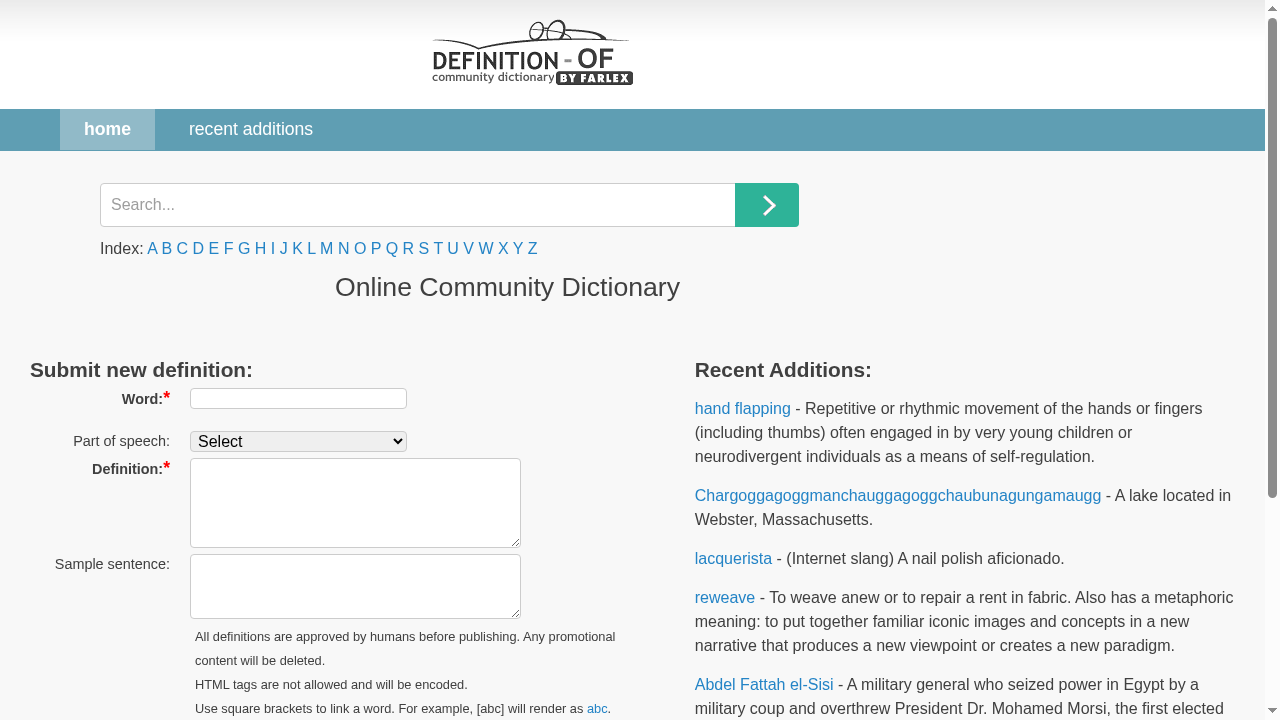
Visit definition-of.comdefinition-of.com operates as a user-generated community dictionary that aggregates general English definitions alongside niche slang and adult terminology. While primarily a reference tool, the site features specific entries relevant to the BDSM ecosystem, such as 'bondage' under B and euphemisms for taboo words under C. The platform functions more as an open glossary than a dedicated fetish community or content hub.
As a niche analyst reviewing the alternative lifestyle ecosystem, definition-of.com presents itself as a hybrid resource: part general dictionary, part slang aggregator with adult leanings. The site relies heavily on user-generated content ('Community Dictionary'), allowing submissions that range from standard definitions to specific fetish terminology like 'bondage' and 'black'. Its positioning is utilitarian rather than immersive; it serves users looking for quick glossary lookups rather than those seeking community interaction or media consumption. Commercially, the site appears to leverage affiliate links to major dictionary providers (Farlex, TheFreeDictionary) alongside potential ad revenue from high-traffic letter pages. While authentic in its UGC model, the content quality is inconsistent, with some entries appearing generic or AI-assisted ('A rate'). It occupies a peripheral role in the BDSM ecosystem—as a reference tool rather than a core destination—making it a useful but secondary property for niche marketers.
- Content is user-generated with human approval claims.
- Positioning as a general dictionary rather than niche-specific hub.
- Likely ad/affiliate revenue model via external dictionary links.
- Serves as a glossary reference tool within the lifestyle ecosystem.
- Quality varies
- some entries look templated or low-effort.
- Alphabetical structure targets long-tail keyword queries (e.g., 'definition of B').
- Site structure is shallow on letter pages D, E, F with null metadata.
- Outbound links to high-authority dictionary sites may boost domain trust.
- Content depth varies significantly between popular and obscure terms.