newstatesman.com
newstatesman.com
New Statesman is a legacy UK political and cultural magazine rather than a dedicated adult or fetish property. While it covers culture, relationships, and occasional sexuality themes like fertility crises, its core focus remains progressive politics....
Visit newstatesman.comNew Statesman is a legacy UK political and cultural magazine rather than a dedicated adult or fetish property. While it covers culture, relationships, and occasional sexuality themes like fertility crises, its core focus remains progressive politics. It appears as a high-authority generalist media brand with potential crossover appeal for lifestyle readers but lacks specific BDSM infrastructure.
As an editor scanning the alternative lifestyle ecosystem, New Statesman stands out as a heavyweight legacy publication rather than a niche kink player. The site functions primarily as a magazine/blog focused on UK politics and culture, featuring opinion pieces, international affairs, and cultural criticism. While it occasionally touches on themes relevant to our audience—such as fertility crises, 'Les Liaisons Dangereuses' literature reviews, and progressive social commentary—it does not position itself as a fetish or BDSM destination. Commercially, it appears robust with subscription models (newsletters) and ad revenue, suggesting a real property rather than an SEO shell. For a niche-focused visitor seeking specific kink content, this is likely a secondary stop; for those interested in the cultural context of modern relationships and politics, it offers high-value editorial depth.
- Legacy media brand with high editorial authority
- Focus on politics/culture rather than explicit fetish content
- Subscription and newsletter-driven revenue model
- Generalist property with occasional niche cultural overlap
- Authentic, human-written journalism vs AI filler
- Standard magazine architecture with clear category silos
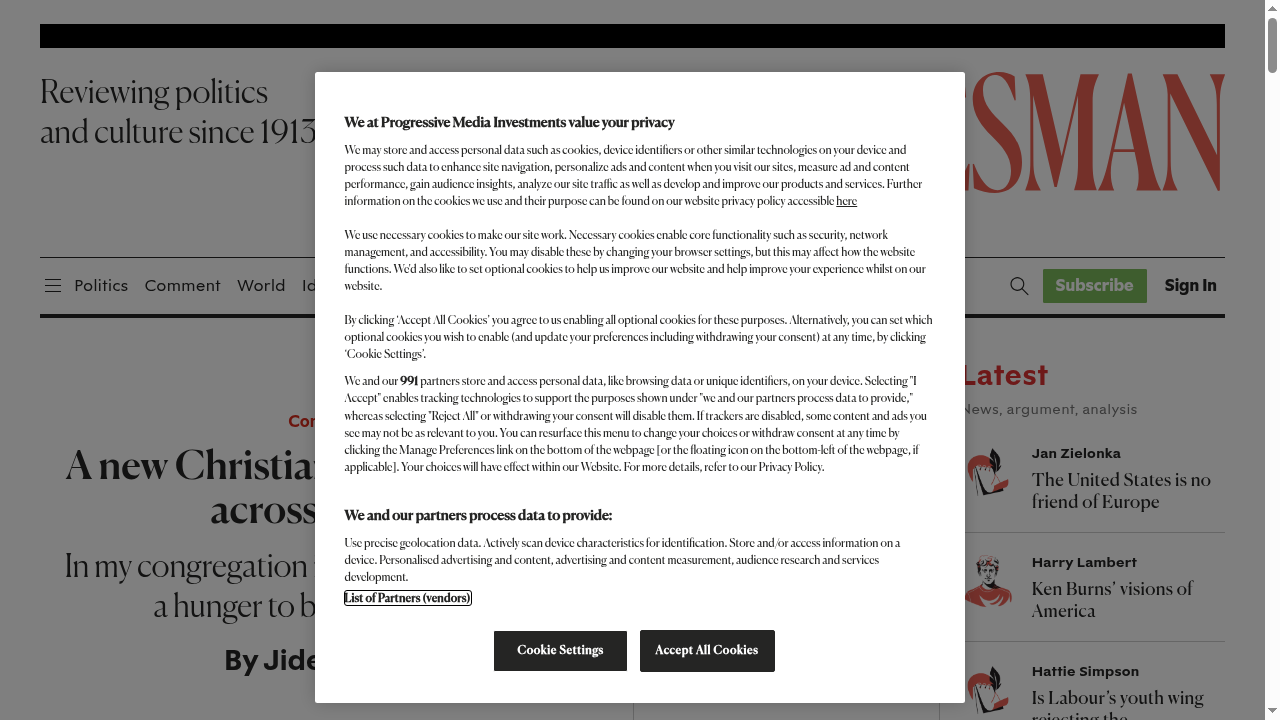
- Heavy cookie consent implementation indicating mature monetization
- Strong internal linking structure across politics and culture sections
- High domain authority likely due to age (since 1913)