soundcloud.com
soundcloud.com
SoundCloud functions as a general audio streaming aggregator rather than a dedicated BDSM or fetish destination. While it hosts niche creators who may produce erotic content, the platform lacks specific curation for kink subcultures in its visible me...
Visit soundcloud.comSoundCloud functions as a general audio streaming aggregator rather than a dedicated BDSM or fetish destination. While it hosts niche creators who may produce erotic content, the platform lacks specific curation for kink subcultures in its visible metadata. It serves primarily as an infrastructure layer for independent artists rather than a community hub for the core alternative lifestyle audience.
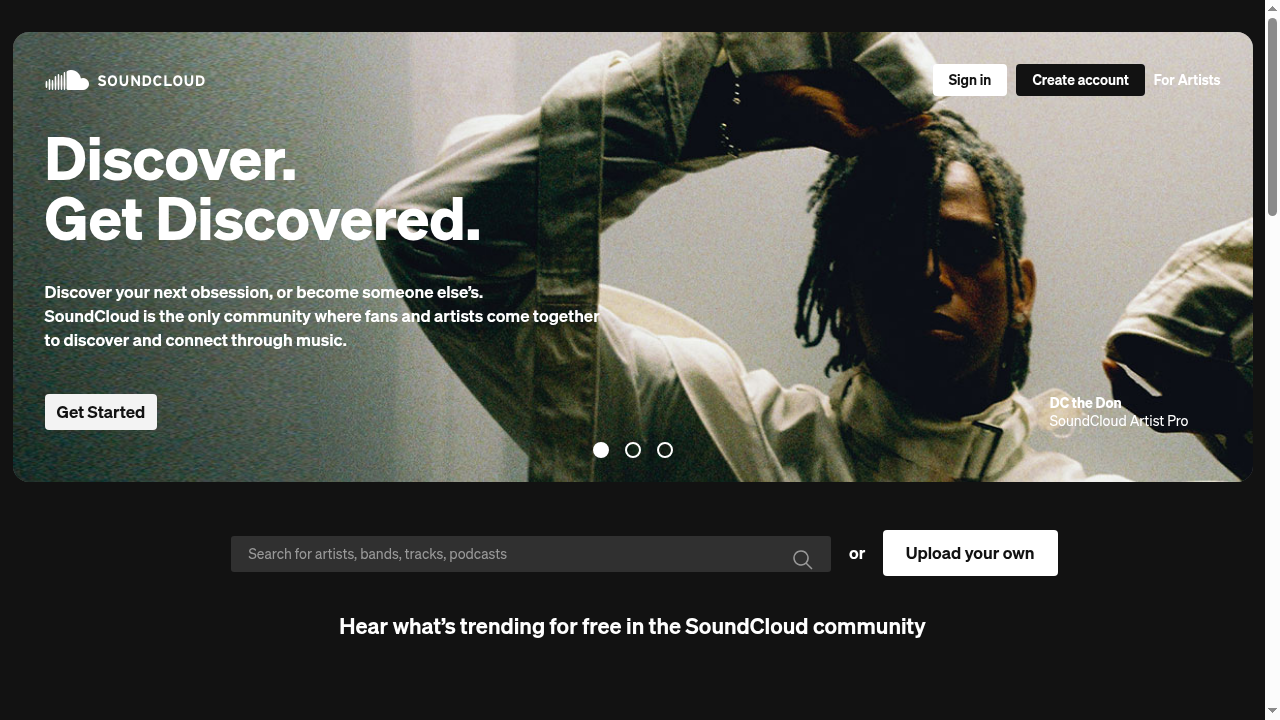
From the perspective of a fetish ecosystem analyst, SoundCloud appears as a high-value generalist property that overlaps with niche interests but lacks specialized positioning. The site operates as a creator platform focused on monetization through Artist Pro subscriptions and advertising, evidenced by the heavy emphasis on 'Reach more listeners' and tiered pricing plans in the payload. Unlike dedicated BDSM directories or community forums, it relies on broad search terms rather than specific fetish taxonomy for discovery. The crawl data reveals significant JavaScript dependency and cookie consent overlays that obscure content depth during static analysis. While commercially robust with millions of tracks, its utility for a hardcore kink audience is secondary; it is best viewed as a distribution channel for audio erotica or DJ sets rather than a primary destination for the lifestyle community.
- Generalist music platform with peripheral relevance to kink audio niches.
- Monetization focused on Artist Pro subscriptions rather than direct fetish sales.
- Lacks specific BDSM/femdom taxonomy in visible metadata.
- Acts as a distribution hub rather than a dedicated community destination.
- Heavy JavaScript dependency obscures content during static crawling.
- Cookie consent banners dominate readable text preview on key pages.
- Generic meta descriptions limit specific search visibility for niche terms.
- Site structure relies on dynamic routing rather than deep directory indexing.