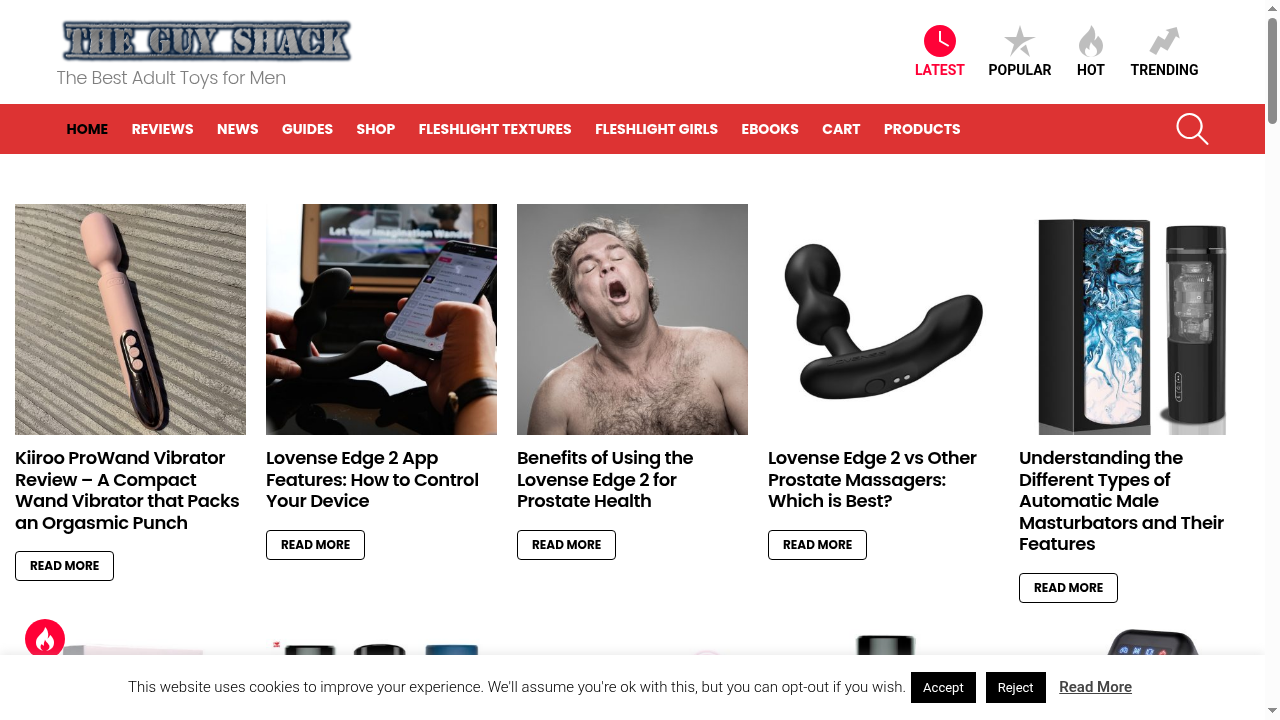
theguyshack.com
theguyshack.com
The Guy Shack operates as a male-centric adult content hub blending product reviews with relationship advice. It functions primarily as an affiliate-driven property targeting men interested in sex toys and dating dynamics. While it claims to be a sto...
Visit theguyshack.comThe Guy Shack operates as a male-centric adult content hub blending product reviews with relationship advice. It functions primarily as an affiliate-driven property targeting men interested in sex toys and dating dynamics. While it claims to be a store, its structure resembles a low-value content farm designed to funnel traffic into CPA offers.
This site positions itself at the intersection of adult e-commerce and lifestyle blogging, specifically catering to a male demographic seeking practical advice on intimacy and product purchases. The homepage title aggressively targets keywords like 'cheap' and 'high end,' signaling a heavy reliance on search volume rather than brand authority. Outbound links reveal a network of 'Shack' domains (e.g., vrpornshack.com, thepornshack.com), suggesting this is part of a larger affiliate content cluster. The content itself, such as guides on talking dirty or long-distance relationships, feels generic and templated, lacking the depth expected from a niche-native editorial property. Commercially, it appears to be a monetization vehicle for third-party vendors like FeelRobotics rather than a direct retailer with proprietary inventory.
- Content feels templated with generic relationship advice mixed with product pitches.
- Positioning as a hybrid blog-store to capture broad search traffic for sex toys.
- Business model relies heavily on affiliate CPA networks rather than direct sales margins.
- Acts as a traffic funnel within a larger 'Shack' domain network ecosystem.
- Quality suggests low-value filler content designed for SEO rather than community engagement.
- Homepage title is keyword-stuffed with high-competition terms like 'cheap sex toys'.
- Site structure shows shallow crawl depth (5 pages crawled vs 90 discovered) indicating thin architecture.
- Search visibility likely driven by long-tail blog posts rather than core product pages.
- Indexability appears limited to article categories, with shop pages potentially secondary.