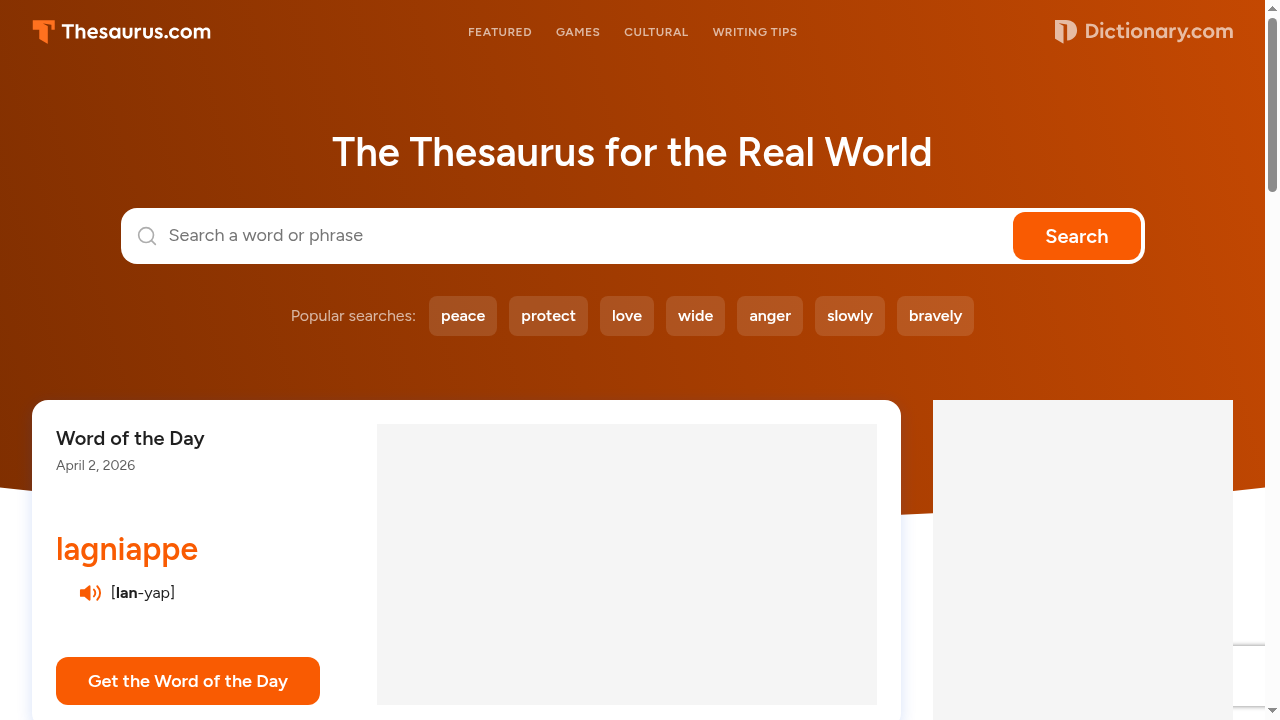
thesaurus.com
thesaurus.com
Thesaurus.com appears to be a legacy educational utility rather than a core adult or fetish property. It functions as a general vocabulary resource with high domain authority, likely serving writers and students within the niche ecosystem who need pr...
Visit thesaurus.comThesaurus.com appears to be a legacy educational utility rather than a core adult or fetish property. It functions as a general vocabulary resource with high domain authority, likely serving writers and students within the niche ecosystem who need precise terminology. While not explicitly kink-focused, its extensive content library suggests potential for SEO value or reference material.
As an editor scanning the BDSM and alternative lifestyle landscape, Thesaurus.com stands out as a general utility outlier rather than a dedicated fetish property. The site operates under Dictionary Media Group (IXL Learning) and focuses on synonyms, antonyms, and writing tips. It positions itself as a trusted authority for language mastery rather than erotic content or community connection. Commercially, it likely relies on display advertising and educational affiliate traffic from IXL. In the niche ecosystem, it acts less like a player and more like a high-authority reference tool that could support content writers or SEO strategies targeting relationship vocabulary. It is a real property with significant scale (5000+ pages), avoiding the 'filler' label despite lacking explicit kink signals.
- Content style observation: Dry utility rather than erotic or community-driven.
- Positioning observation: Trusted legacy brand for language mastery.
- Business model guess: Ad-supported with educational affiliate cross-links to IXL.
- Niche ecosystem role observation: High-authority reference tool within the broader niche content ecosystem.
- Quality/authenticity observation: Authentic legacy property rather than an AI-generated or low-value shell.
- SEO/content observation: High page inventory (5065 pages) suggests deep indexability for long-tail keywords.
- Site structure observation: Strong internal linking structure between browse lists and articles.
- Search visibility observation: Outbound links to dictionary.com and social platforms indicate a hub-and-spoke strategy.
- Indexability/content depth observation: Content depth is high but generic, lacking niche-specific semantic clustering.