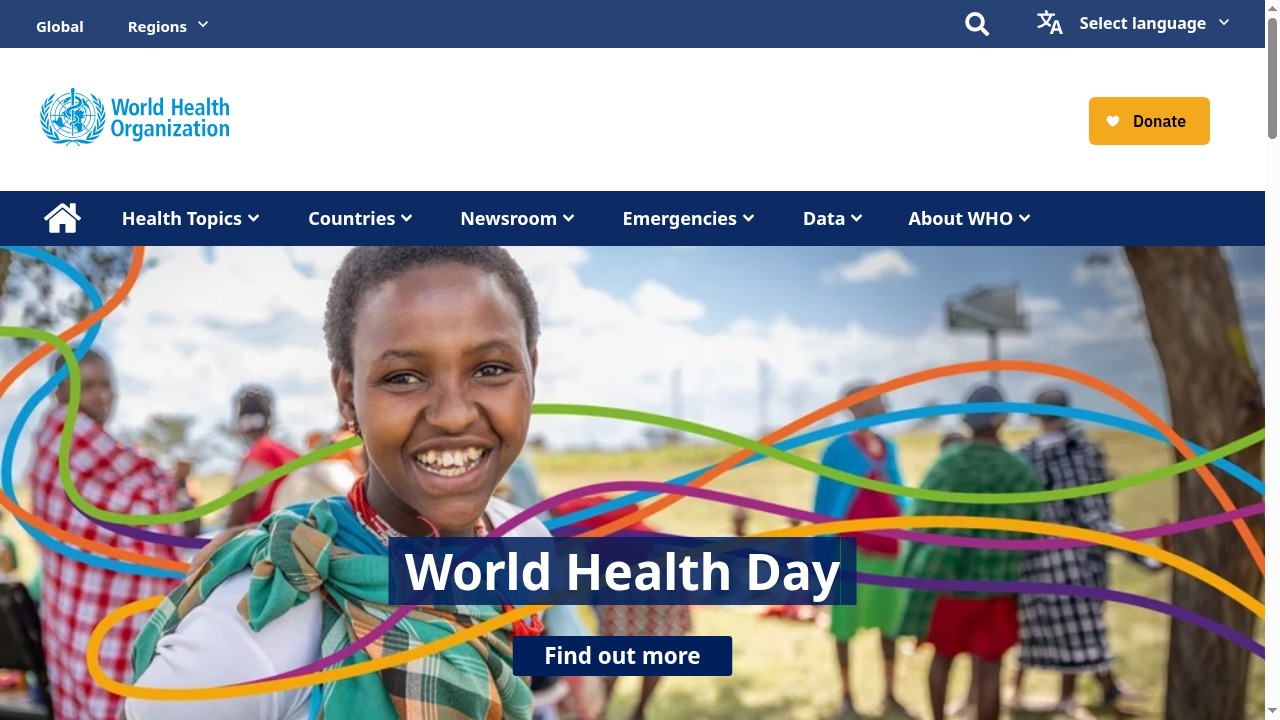
who.int
who.int
WHO.int stands as a high-authority institutional outlier within the adult lifestyle ecosystem, functioning primarily as a global health resource rather than a fetish or dating hub. The site targets policymakers and general consumers with clinical yet...
Visit who.intWHO.int stands as a high-authority institutional outlier within the adult lifestyle ecosystem, functioning primarily as a global health resource rather than a fetish or dating hub. The site targets policymakers and general consumers with clinical yet accessible content focused on disease management and regional safety protocols. While it lacks explicit kink monetization, its structural depth suggests significant commercial value through non-profit authority.
As an experienced niche editor reviewing this payload, WHO.int presents a fascinating anomaly compared to typical BDSM or fetish properties. It operates as a definitive educational/resource site rather than a community forum or dating platform. The content strategy relies on hierarchical health topics and regional segmentation (e.g., South-East Asia, Europe), indicating a focus on broad reach over niche specificity. Unlike low-value filler sites common in the kink space, this is a verified UN agency property with massive trust signals. However, for a fetish-focused audience, it serves more as a cross-over utility site—perhaps relevant for endometriosis or mental health topics within the lifestyle community—rather than a primary destination for erotic content or creator monetization.
- Content style is institutional, clinical, and authoritative rather than erotic or community-driven.
- Positioning emphasizes global reach and scientific credibility over niche lifestyle appeal.
- Business model appears non-profit/UN funded with minimal direct monetization signals.
- Niche ecosystem role is that of a high-authority cross-over resource rather than a core kink player.
- Quality/authenticity observation: High trust, low spam risk, verified institutional property.
- SEO strategy relies on topic clusters and mega-menu navigation for health subjects.
- Site structure is deeply hierarchical with clear regional and topical silos.
- Search visibility likely high due to domain authority despite shallow crawl sampling in this payload.
- Indexability content depth appears vast (850 pages discovered) but only 5 were sampled.